

News
-
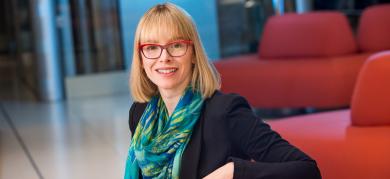 Professor Sally Gras named one of 50 women at the cutting edge of science in Australia.
Congratulations to Professor Sally Gras for making the list as one of Australia's 50 exceptional and interesting female researchers and scientists in honour of International Women's Day 2023.
-
 Bio21's Professor Leann Tilley receives Lifetime Achievement Award
Congratulations to Professor Leann Tilley on a Lifetime Achievement Award.
-
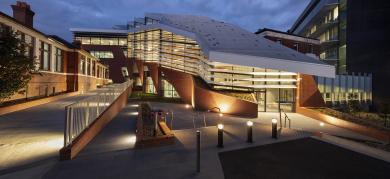 Media Release: Cyclotek announces the CRIB Project at Bio21
Cyclotek and University of Melbourne’s Bio21 Institute are pleased to announce a significant collaboration into the development of radiopharmaceuticals for their Australian and Global partners.
-
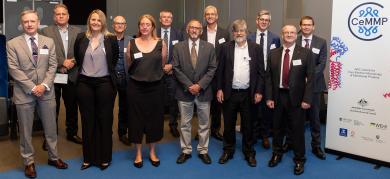 Industrial Transformation Training Centre for Cryo-electron Microscopy of Membrane Proteins
Bio21 hosts the launch of the new centre of excellence for cryo-electron microscopy
-
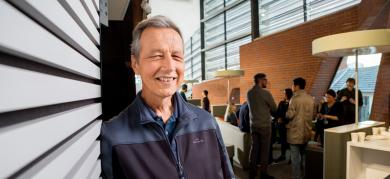 Professor Ary Hoffmann AC receiving an Order of Australia (General Division)
Congratulations to Professor Ary Hoffmann AC on receiving an Order of Australia (General Division)
-
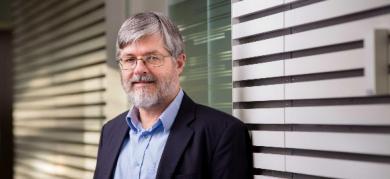 Professor Michael Parker receives funding to advance research on breast cancer treatment
Professor Michael Parker has been awarded BioCurate’s Proof of Concept funding to advance a research collaboration with Professor Yeesim Khew-Goodall on targeted treatments for breast cancer.
-
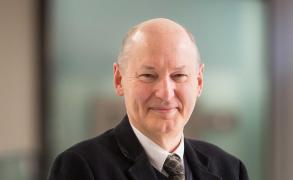 Professor Eric Reynolds inducted as President of the International Association for Dental Research (IADR)
Bio21’s Melbourne Laureate Professor Eric Reynolds on being inducted as President of the International Association for Dental Research (IADR)
-
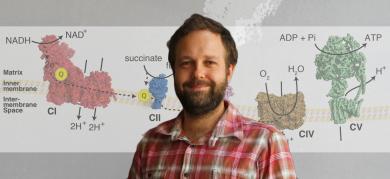 Dr David Stroud awarded prestigious NHMRC Investigator Grant
Congratulations to Dr David Stroud on the award of a prestigious NHMRC Investigator Grant
-
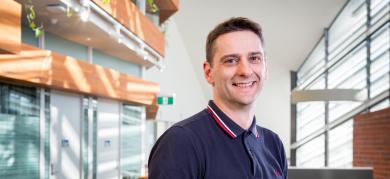 Professor Paul Donnelly and the highly successful public listing of the company he co-founded.
Congratulations to Professor Paul Donnelly on the highly successful public listing of the company he co-founded, Clarity Radiopharmaceuticals
-
 New approaches for antibiotic and anti-inflammatory sulfa-drug allergies
Researchers have discovered a mechanism that activates part of the body’s immune system through a class of molecules that structurally resemble sulfa-drugs.